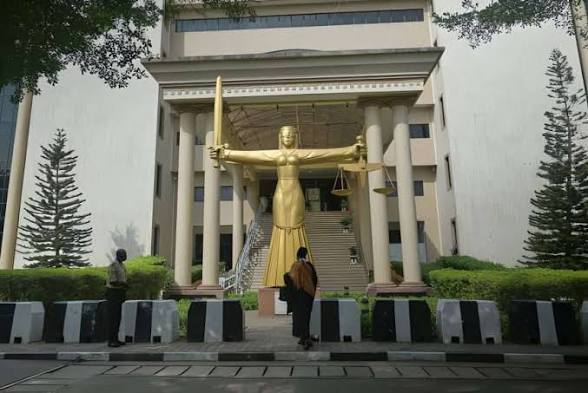
A Federal High Court in Abuja has delivered rulings in two terrorism-related cases that are drawing attention to how Nigeria’s justice system handles individuals caught in conflict situations, particularly those claiming to be victims rather than collaborators.
One of the defendants, 37-year-old Ali Kolo, told the court he was shot in the leg by suspected Boko Haram fighters in Borno State while attempting to report their activities to the military, an injury that left him unable to complete the journey before his eventual arrest in 2017.
Despite his account, Kolo was prosecuted by the Federal Government for failing to disclose information about the insurgents. He pleaded guilty to one of four charges—concealment of information—while maintaining that his inability to report was due to the gunshot wound he sustained.
In his judgment, Justice Peter Lifu acknowledged that the defendant had indeed failed to notify authorities but accepted that the circumstances surrounding the incident were beyond his control. The court sentenced him to nine years imprisonment but ordered that the term run from the date of his arrest.
With that calculation, the court noted that Kolo had already spent more than the required time in detention and directed his immediate release, stressing that further incarceration would amount to double punishment.
The case forms part of a broader prosecution effort involving hundreds of individuals linked to terrorism-related offences, raising questions about how evidence, intent, and personal circumstances are assessed in such trials.
In a separate ruling, the court sentenced another defendant, Ibrahim Buba, to 10 years imprisonment after he admitted knowing suspected insurgents but failed to inform authorities, instead fleeing across states before his arrest in 2023.
Together, the cases underscore the legal and ethical complexities facing the justice system as it balances national security concerns with individual rights, particularly in regions heavily impacted by insurgency.