A controversial bill to permanently install the Ooni of Ife and Sultan of Sokoto as exclusive co-chairmen of Nigeria’s proposed National Council for Traditional Rulers has ignited fierce nationwide opposition, threatening to deepen regional fractures in Africa’s most populous nation. The legislation, now advancing through the Senate, faces condemnation from major socio-cultural groups who decry it as a constitutional betrayal of Nigeria’s pluralistic foundations.
The Igbo apex organization Ohanaeze Ndigbo Worldwide launched a blistering critique Sunday, condemning Senate Bill SB. 24 as “inequitable, discriminatory and ethnocentric” in a statement from National Publicity Secretary Dr. Ezechi Chukwu. The group warned the move deliberately sidelines apex traditional rulers from other ethnic nationalities and geopolitical zones, violating federal character principles embedded in Nigeria’s constitution.
“This bill lacks all ethical considerations and objective metrics for national unity,” Chukwu declared, characterizing the legislation as “distasteful, reprehensible and objectionable” in a pluralistic society. Ohanaeze demanded immediate withdrawal and comprehensive revision to ensure equitable representation.
Simultaneously, the Middle Belt Forum (MBF) issued a historic rejection of the Sultan’s proposed permanent co-chairmanship. National Spokesman Luka Binniyat argued the Sokoto Caliphate is “historically junior” to Middle Belt monarchies like the ancient Kwararafa Confederacy (circa 800s-1700s AD), whose spiritual heir the Aku Uka of Wukari predates the Caliphate itself. The Forum similarly highlighted the superior historical pedigree of the Attah of Igala, whose kingdom flourished before the 14th century and never submitted to caliphate rule.
The MBF’s opposition rests on four pillars:
Historical Precedence: Documentation showing Middle Belt civilizations existed centuries before the Sokoto Caliphate’s 19th-century establishment
Religious-Secular Conflict: The Sultan’s primary identity as Nigeria’s Muslim spiritual leader makes his secular leadership “a violation of Nigeria’s secular character”
Cohesion Concerns: Institutionalizing Islamic leadership would “alienate Christians and traditional worshippers”
Sovereignty Defense: The Tiv nation Nigeria’s largest ethnic group was never conquered by the Caliphate, making Tor Tiv’s subordination “a gross distortion of history”
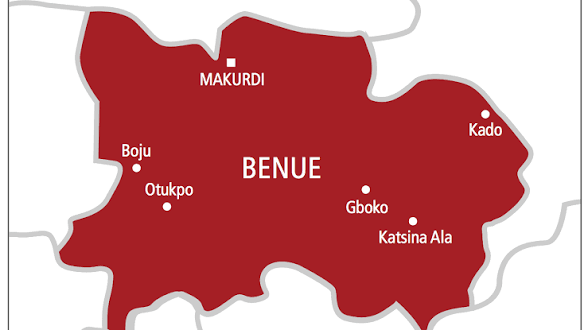
The bill, sponsored by Senator Simon Lalong (Plateau South), ironically faces its fiercest resistance from his native Middle Belt. Despite being the “Gwad-Goemai” of the Goemai people, Lalong’s proposal has triggered threats of regional boycott. The MBF vowed to establish an autonomous Middle Belt council should the bill pass unchanged.
Having cleared its second reading in March 2025, the bill is now before the Senate Committee on Establishment and Public Service. During initial debates, lawmakers clashed over potential conflicts with local governments, though sponsor Lalong defended it as necessary to leverage traditional rulers’ “knowledge on insecurity and conflict resolution” .
Senate President Godswill Akpabio has since mandated clearer role definitions and a public hearing—an opportunity opposition groups will seize to demand either rotational leadership or elected chairmanship. “True national cohesion requires fairness and recognition of historical diversities,” the MBF asserted, proposing rotational chairmanship across geopolitical zones.
The controversy exposes Nigeria’s enduring governance dilemma: balancing symbolic unity with pluralistic realities. By concentrating power in two ethnoreligious icons the Sultan representing northern Islam and the Ooni embodying Yoruba spirituality critics argue the bill neglects Nigeria’s triple heritage (Indigenous, Islamic, Christian) and 250+ ethnic groups.
Ohanaeze’s intervention further signals escalating southern discontent following recent protests over exclusion from key federal appointments. Just last week, the group condemned “glaring exclusion” of South-East/South-South representatives from strategic parastatal boards —a pattern suggesting systemic marginalization.
As Nigeria’s Senate prepares for decisive hearings, this legislation has become a litmus test for whether constitutional democracy can reconcile with traditional authority. The outcome may determine not just the structure of a traditional council, but the survival of Nigeria’s fragile national bargain.