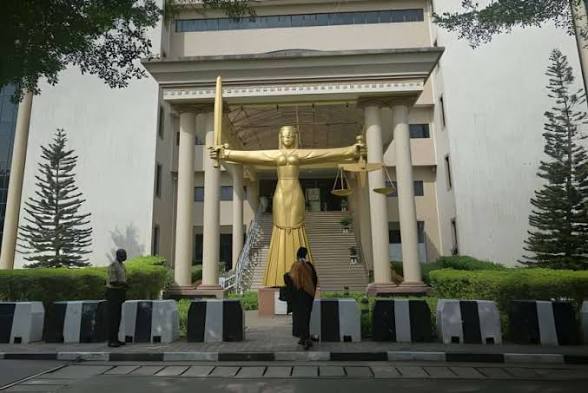
The Federal High Court in Abuja heard detailed evidence on Monday outlining how funds moved through multiple bank accounts linked to the immediate past Attorney-General of the Federation, Mr. Abubakar Malami, SAN, and his family, in the ongoing money laundering trial. Witnesses testified about transactions spanning hotels, companies, and development initiatives, illustrating the intricate financial networks under scrutiny.
Mr. Daniel Simon Kwayil, a compliance officer, told the court that Meethaq Hotels Limited, where Malami’s wife, Hajia Asabe Rakiya Bashir, is the sole signatory, was used to transfer millions of naira directly to Malami and his law firm. The transactions, occurring between 2022 and 2025, included multiple large transfers, according to bank statements submitted as exhibits during the proceedings.
The Economic and Financial Crimes Commission (EFCC) alleges that Malami, his wife, and son Abdulaziz, concealed and laundered public funds totaling approximately N9 billion through various accounts and firms. Among these were Metropolitan Auto Tech Limited, Rayhaan Hotels Limited, and Khadimiyya for Justice and Development Initiative, which received and disbursed hundreds of millions of naira.
Kwayil detailed payments such as a N14 million instant transfer to Malami on February 5, 2024, followed by additional transfers of N24 million and N12.5 million in subsequent months. The statements indicate a consistent pattern of inflows from the hotel account, with supporting documents highlighting the hotel’s sole signatory as Malami’s wife.
A second bank witness, Mr. Olomotane Egoro, testified about accounts operated by Malami’s son and the defendants’ firms. He provided evidence of a N400 million loan facility to Rayhaan Bustan and Agro Allied Limited, as well as inflows totaling over N722 million into the Khadimiyya account between 2019 and 2023. Egoro’s testimony also included disbursements in multiple tranches to companies such as New Horizon Limited.
The witnesses’ accounts emphasize the complexity and scale of the financial transactions, illustrating the challenges authorities face in tracking alleged laundering operations that span multiple entities and years. Defence counsel, Mr. Joseph Daudu, SAN, objected at points, citing the need for time to study exhibits and confirm the witnesses’ statements. Justice Joyce Abdulmalik allowed the defence to cross-examine and review evidence before proceeding.
The court adjourned the trial to April 20 for continuation of hearings. The testimonies underscore the ongoing efforts by the EFCC to map financial flows in high-profile cases, highlighting both the procedural rigor of the trial and the detailed documentation required to trace alleged diversion of public funds.