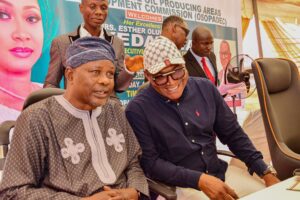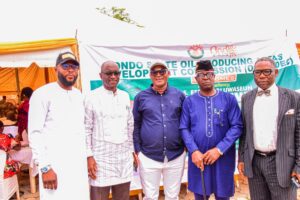
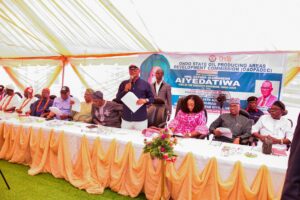
The wife of Ondo State Governor, Esther Oluwaseun Aiyedatiwa, on Tuesday launched a bursary and scholarship program under the Ondo State Oil Producing Areas Development Commission (OSOPADEC). At the Commission’s headquarters in Oba-Ile, she flagged off the disbursement of ₦286.7 million to 4,873 students from Ilaje and Ese-Odo Local Government Areas, the state’s oil-producing belt.
Mrs. Aiyedatiwa called the program “a beacon of hope for the future leaders.” She linked the initiative to Governor Lucky Aiyedatiwa’s OUR EASE policy thrust, which centers on education, youth empowerment, healthcare, infrastructure, and security. Her message to the students was clear: stay disciplined, because government support is an investment that carries expectations.
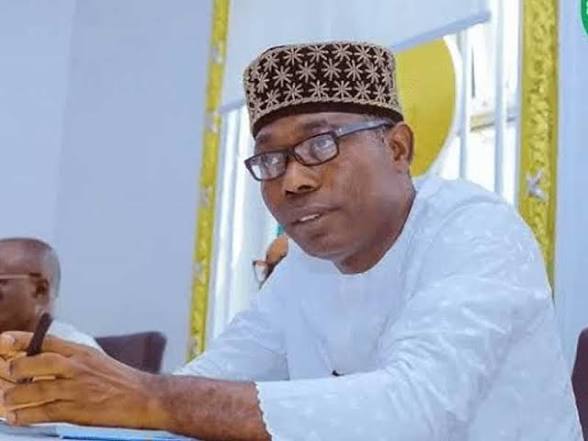
The details of the money stood out. According to OSOPADEC Chairman, Biyi Poroye, students would receive between ₦50,000 and ₦200,000, depending on their category. He added that 682 applicants had been withheld for additional verification, citing the need for transparency in a system historically vulnerable to abuse.
Poroye revealed that Governor Aiyedatiwa had approved a ₦33.8 billion budget for the Commission — the largest in its history. He said the Governor also directed the Commission to introduce leadership training for students and to set up a new Sports and Tourism Department, signaling a shift toward youth development beyond classroom funding.
But Poroye also made another appeal. He repeated his long-standing call to increase OSOPADEC’s statutory derivation from 40 percent to 55 percent, arguing that without expanded funding, the Commission’s reach would remain constrained. “Higher allocation,” he said, “means more impact and more life-changing projects.”
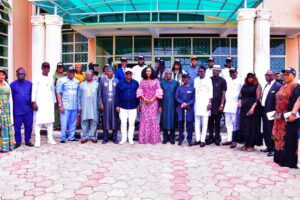
The event drew an audience of state lawmakers, traditional rulers, government officials, students, and community leaders. Several attendees emphasized the continuity of the bursary program, seeing it as one of the most tangible links between oil revenue and human development in the Niger Delta fringe of Ondo.
The numbers, the promises, and the politics hung together: nearly ₦287 million disbursed, a record ₦33.8 billion budget, and the enduring pressure for more oil revenue control. For students, it meant cash in hand; for the administration, another chapter in proving that oil money can be translated into visible benefit.