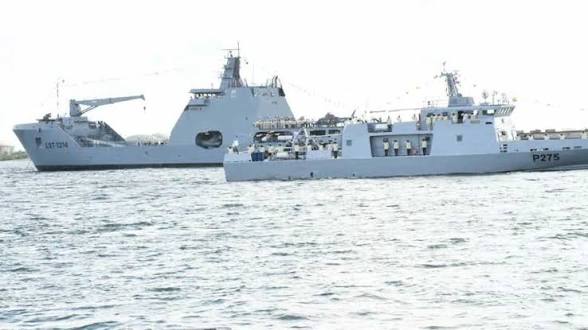
Nigeria’s latest naval deployment is being positioned as a frontline defence for regional trade and coastal communities, as the Nigerian Navy launches a major multinational exercise to curb maritime crimes in the Gulf of Guinea.
The operation, known as Exercise OBANGAME EXPRESS 2026, began on April 26 with assets including nine warships, two helicopters, and specialised maritime units deployed across strategic waters. The five-day exercise, involving more than 30 countries, is designed to strengthen collective security responses to threats such as piracy, crude oil theft, and trafficking, according to naval authorities.
Flagging off the exercise aboard NNS IKENNE, the Chief of Naval Staff, represented by Rear Admiral Patrick Effah, said the initiative focuses on improving coordination among regional forces. Officials say this is critical at a time when illegal activities at sea continue to pose risks to commercial shipping routes and coastal livelihoods across West and Central Africa.
The Navy explained that the exercise uses simulated scenarios, including search and rescue missions and counter-piracy operations, to test how quickly and effectively forces can respond to real-life emergencies. Authorities say these drills are aimed at preventing disruptions that could impact energy supplies and international trade flowing through the Gulf.
Security analysts note that the Gulf of Guinea remains one of the world’s most strategic maritime corridors, making sustained cooperation essential. The Navy highlighted that Nigeria’s removal from the global piracy watch list in 2022 was achieved through similar joint efforts, adding that maintaining that progress requires constant vigilance and coordination.
Beyond military collaboration, the exercise also brings together agencies such as customs, immigration, and anti-narcotics authorities, reinforcing a multi-layered approach to security. Officials say the broader goal is to protect economic assets, ensure safer waters for maritime operators, and reassure communities that depend on the sea for survival.