ANPMP AGM: Prof. Faduyile harps on the need to build resilient private healthcare system.
By Steve Ovirih.
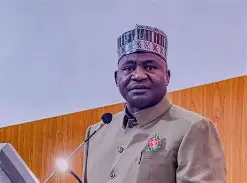
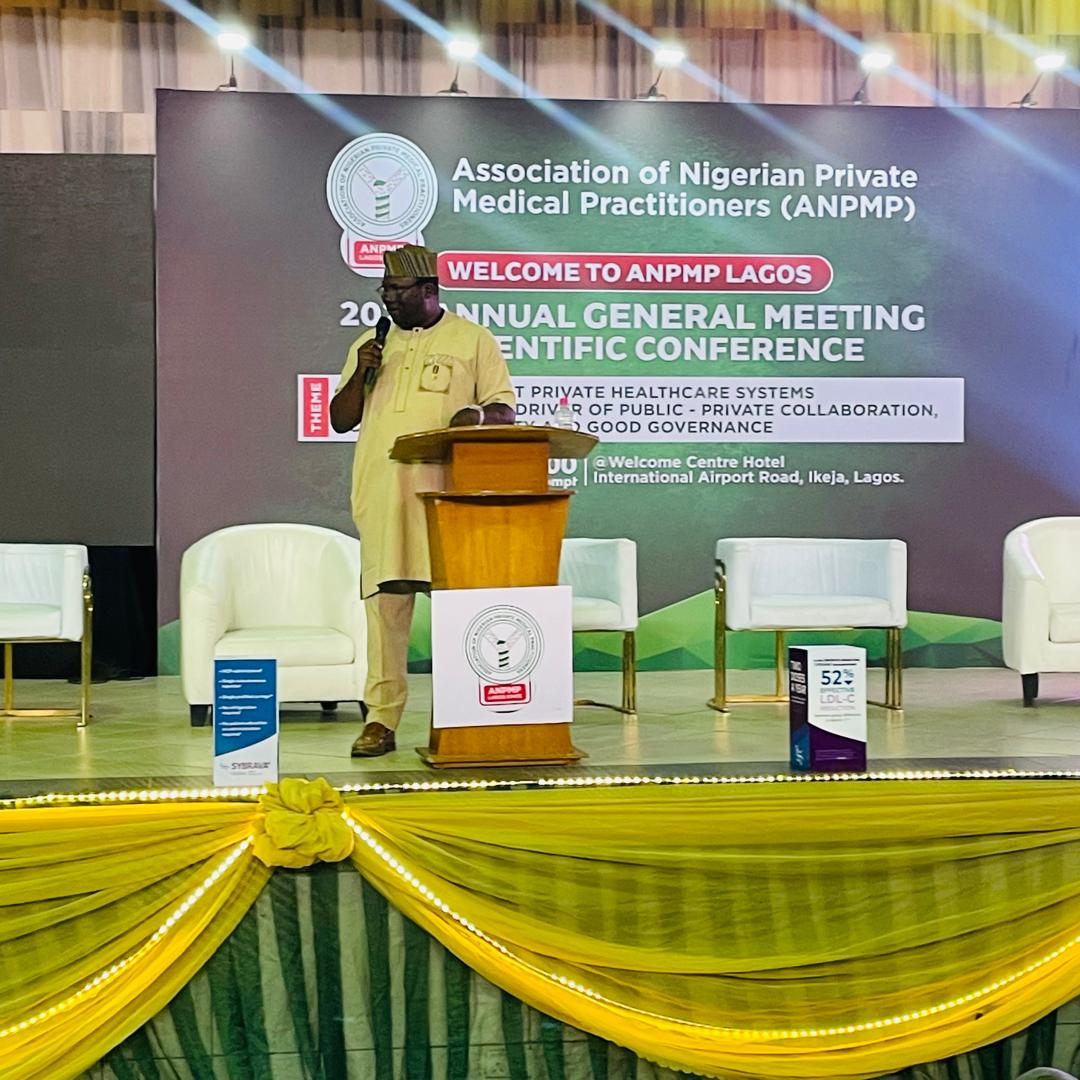
Past President, Nigeria Medical Association, NMA and Professor of Pathology and Forensic Medicine , Prof. Adedayo Francis Faduyile, OON, has emphasized the need to build resilient private healthcare system in Lagos State and across Nigeria, describing such need as a strategic drive for public- private collaboration that will enhance economic stability and good governance. The university Don gave this charge at the 2025 Annual General Meeting of The Association of Nigerian Private Medical Practitioners(ANPMPN), which held in Lagos on Wednesday.
Prof. Faduyile who delivered the Guest Lecture at the high octane gathering of Private Medical Practitioners in Lagos acknowledged the Leadership of ANMPN for their contribution to sustaining a virile Lagos health sector.
He noted that the topic of his lecture, ‘Building Resilient Private Healthcare System in Lagos State : A Strategic Drive For Public Private Collaboration , Economic Stability and Good Governance’ is a timely issue of discourse at a time that medical practice is apparently threatened in Nigeria majorly as a result of both human and material resources deficiencies.
” The material resources part of which is funding has been a perennial issue that has been confronting the healthcare system in Nigeria with dwindling of quality services and it is almost grinding medical practice to a halt.
“On the other hand, the human resource for health has been having an oscillating curve with period of mass movement of health professionals at different period of the nation’s history.
” However, the one being experienced now is like an avalanche that sees professional colleagues leave the country massively, ” Prof. Faduyile observed, noting that it has put medical practice in a prostrate position with man power challenge in a profession in which more human resources are adequately required.
He said there is an urgent need to redesign the nation’s healthcare system and practice in the provision of a public- private collaboration for effective stability and good governance.
Faduyile said at a time in Nigeria , there was mass exodus of highly qualified medical doctors to other countries occasioned by an economy that nosedived into depression, stressing that best hands in the health sector left during this era and all of them are making enviable exploits in foreign land, regrettably , these would have been the leading light of the profession in Nigeria if successive governments and their policies had not sent these health experts away to foreign lands.
Prof. Faduyile therefore called on government to stamp out the precarious situation on funding of public healthcare system stressing that budgetary allocations to the health sector remain far below the World Health Organization (WHO) and African Union (AU) recommendation of 11% and 15% respectively of a country’s Gross Domestic Product (GDP). He indicated that Nigeria cannot afford to be off the track with respect to achieving the health related Millennium Development Goals (MDG).
While noting that there is need to strengthen medical or health practice in Nigeria, a vibrant private sector is needed to help save the healthcare system since government has been shying away from providing necessary funding to equip the health facilities. “Positing ways of building resilient private healthcare system , it is therefore imperative to change the mode of operations and engagement of the patients in Lagos, nay , Nigeria , now as there have been many major shifts in healthcare outlook and financing.
” The national and subnational government have largely failed to avail affordable loan scheme for healthcare professionals hence it is very difficult to amass the huge amount needed to start a good practice . This is therefore begging for a joint collaboration amongst medical practitioners in order to start a high profile practice, ” Prof. Faduyile maintained.
He advised medical experts in private practice to collaborate with the national government and the local government on how to forge a workable agreement and partnership which will foster direct benefit that will improve the health system and make life better for the end users of the health facilities.