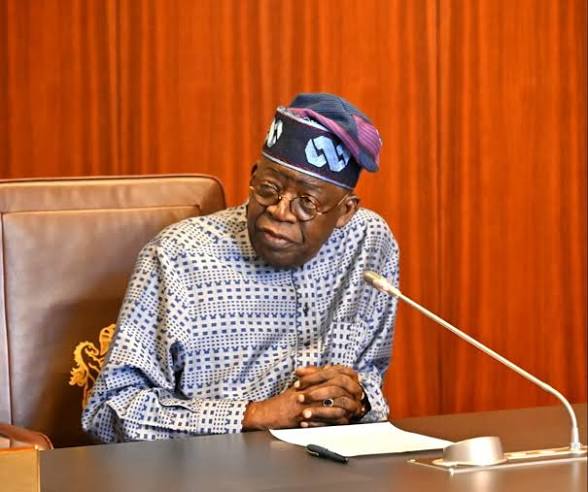
President of Nigeria, Bola Ahmed Tinubu has secured the presidential ticket of the All Progressives Congress for the 2027 general election after a nationwide direct primary that delivered an overwhelming victory in Abuja. But beyond the scale of the win, the exercise has renewed debate about the level of internal competition within major political parties and the future of intra-party democracy ahead of the next election cycle.
Results announced on Sunday at the Bola Ahmed Tinubu International Conference Centre in Abuja showed the president polling 10,999,967 votes against 16,504 votes recorded by his challenger, Stanley Osifo. Party officials said the figures emerged from direct primary elections conducted simultaneously across the country’s 8,809 wards on Saturday, May 23, with registered APC members participating in the process rather than elected delegates.
The primary marked the first time the ruling party adopted a nationwide direct voting model for its presidential contest, a move party leaders say was designed to broaden participation and strengthen legitimacy. Tinubu posted his highest numbers in Lagos, where he secured 814,988 votes, while Adamawa, Kaduna, Imo and Kano also delivered large margins in his favour, according to state collation officers who presented results at the national centre.
However, political observers say the outcome has again placed focus on whether direct primaries alone can guarantee competitive contests within political parties. Osifo recorded no votes in more than 20 reporting states and the Federal Capital Territory, while returning only modest figures in states such as Niger, Kano and Bauchi. Analysts argue that while the process expanded participation numerically, the absence of a broader field of contenders may limit public confidence in internal democratic engagement.
Supporters of the direct primary model insist the exercise demonstrated organisational reach and nationwide mobilisation by the APC at a time political parties are preparing for an intense 2027 campaign season. Party officials involved in the process described the exercise as peaceful and coordinated across most states, noting that ward-based participation gave ordinary members a greater role in determining the party’s presidential candidate.
With the primary concluded, attention is expected to shift to how other parties conduct their own nomination exercises and whether they can avoid internal disputes that have historically followed party primaries in Nigeria. For the APC, the emergence of Tinubu as candidate has now formally set the stage for the next phase of political campaigning, as parties prepare for what is expected to be a fiercely contested 2027 general election.