The Royal Homage: A Son’s Gratitude and the Legacy of Princess Madam Abigail Adedunmade Awofolaju
By Temidayo Awotula
The Dawn of Respect
The last drumbeat had barely faded. The “final dance” — that jubilant closing note in Yoruba funerary tradition — had ended only the day before. Yet, for Dr. Akin Awofolaju, son of the late Princess Madam Abigail Adedunmade Awofolaju, one more ritual remained.
With visitors still lingering in Ile-Ife, many of them friends from distant cities and countries, there was a quiet recognition: they had celebrated a matriarch’s life, but they had not yet touched the cultural heart of her lineage.
Gathered in muted white and cream garments — the softened echo of the aso-ebi worn at the funeral — the group assembled. Dr. Awofolaju, solemn but composed, explained their next step. This was no casual excursion. They would be paying homage to His Imperial Majesty, the Ooni of Ife, the custodian of Yoruba civilization, the monarch seated at the spiritual cradle of humanity.
Gratitude. Homage. Legacy. These, he told them, were the pillars of their visit.
The Journey to Enuwa
The convoy moved slowly towards Enuwa, the ancient square that leads to the palace gates. Along the way, landmarks were pointed out, snippets of history shared — a moving classroom in motion.
At the palace, time seemed to shift. Modernity and antiquity stood side by side: stately walls, ornate gates, and courtyards that breathed with centuries of ritual. Visitors grew hushed.
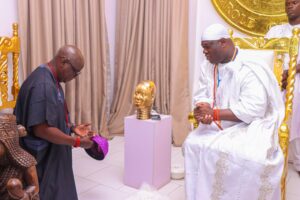
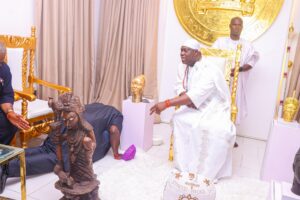
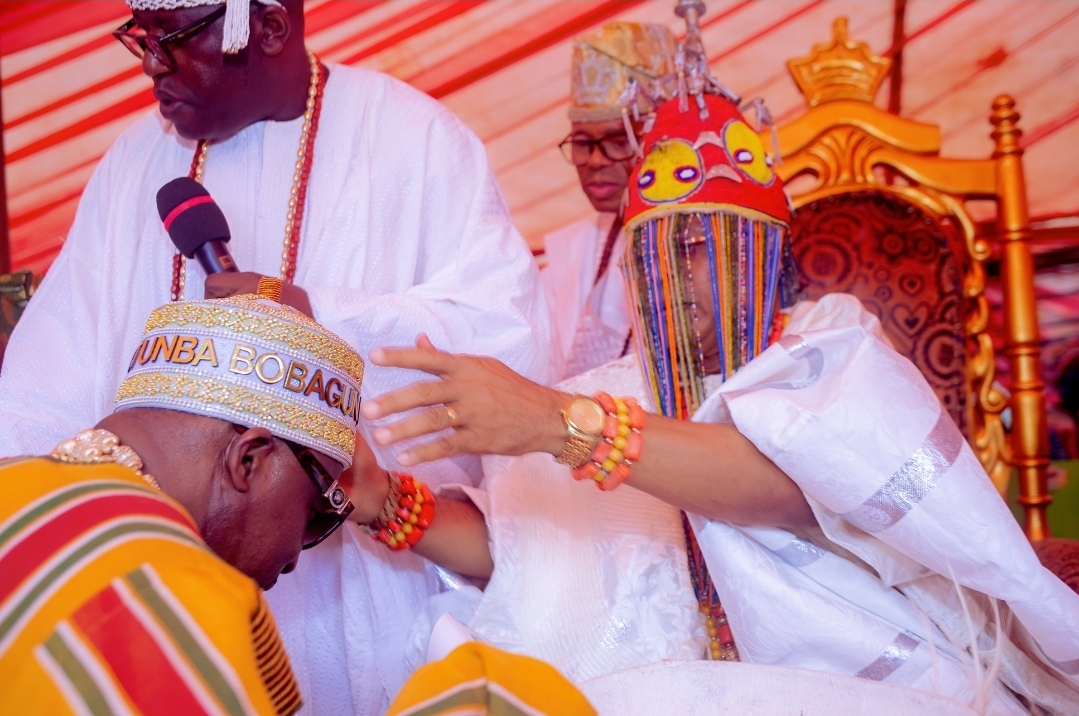
Palace guards received them with choreographed dignity. Soon, a palace aide briefed the delegation on the strict but beautiful protocols: no pointing, no hats indoors, and above all, gestures of reverence — dobale (full prostration) for men, ikunle (kneeling) for women. It was clear: this was no performance. This was heritage
The Audience
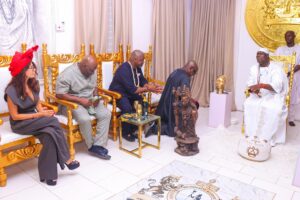
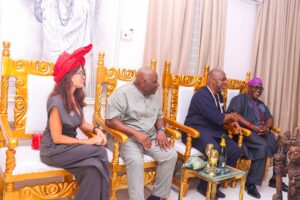
The reception hall of the Ooni’s palace radiates history — portraits of past monarchs watching from the walls, thrones heavy with meaning, silence charged with expectation.
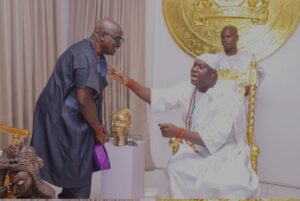
Then, His Imperial Majesty Oba Adeyeye Enitan Ogunwusi, Ojaja II, appeared. Seated in majesty, he transformed the hall into a still point of reverence.
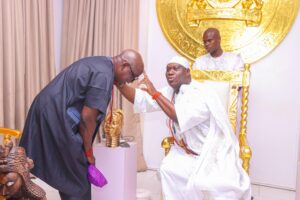
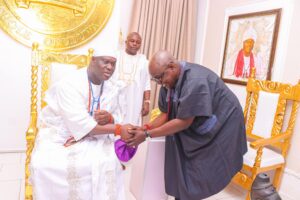
One by one, Dr. Awofolaju and his family led the way, their full prostrations a moving act of continuity. Friends and visitors followed suit, their movements imperfect but heartfelt. The air was thick with respect, with the bridging of cultures and continents.
When the introductions came, Awofolaju’s voice carried the measured weight of both grief and pride:
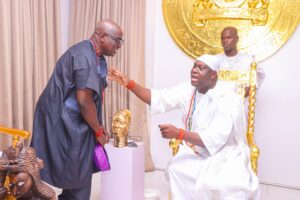
“Kabiyesi, we have come to offer our deepest gratitude for the peace and blessing that surrounded the funeral and celebration of life for my mother, Princess Madam Abigail Adedunmade Awofolaju, of the Lafogido Royal Ruling House. These are the friends and well-wishers who travelled far to honour her. They have witnessed the depth of our culture, and they join me in paying homage to the throne and the house of Odùduwà — Ile-Ife, the source of mankind.”
The Ooni’s response was characteristically expansive. He welcomed the visitors to Ile-Ife as pilgrims to the origin. He praised the family for honouring their mother as a true daughter of the soil. He acknowledged the friends’ journeys, tying their presence to aajọ, the Yoruba spirit of travel, hospitality, and fellowship.
Finally, with calm gravity, he bestowed blessings — for the repose of the departed, and for the health and prosperity of all gathered.
The Farewell
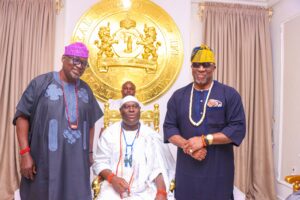
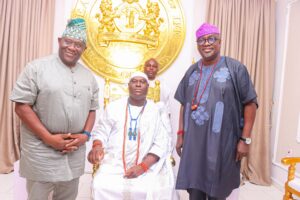
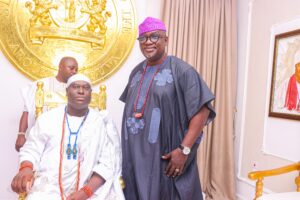
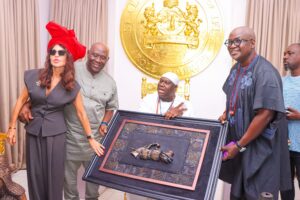
The formality softened afterwards. Smiles replaced solemnity. There were gifts exchanged, a lavish reception offered, and the rare privilege of a group photograph with the monarch himself.
By the time the visitors took their leave — backing respectfully out of the chamber with final bows and kneels — the atmosphere outside the palace gates felt almost celebratory. Drummers struck their talking drums, dancers leapt and spun. The guests, awed and exhilarated, knew they had been part of something singular.
The Reflection
As the convoy rolled away, conversations buzzed with gratitude. “Unforgettable,” one whispered. Another confessed to feeling transformed, even as an outsider.For Dr. Awofolaju, there was only a profound stillness. Standing at the palace gates, looking back once more, he felt the weight of closure. His mother had not merely been laid to rest. She had been honoured at the very source — her lineage affirmed before the highest authority of the Yoruba people, her memory sealed with dignity, her story folded back into the cultural fabric from which it was woven.
It was no longer only a chapter of mourning. It was an act of heritage, a testament, and a son’s ultimate homage.