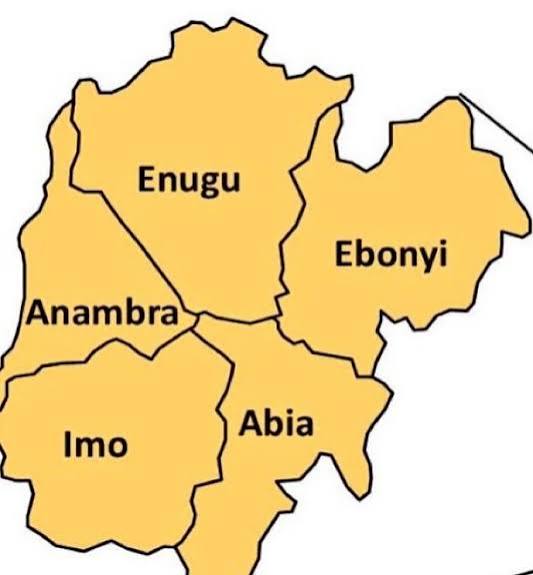
In a major political move, governors and federal lawmakers from Nigeria’s Southeast have united behind a proposal to create two new states in their region. The recommended states are Adada, to be carved from Enugu State, and Anim, which would be formed from parts of Anambra and Imo states. This effort aims to bring the Southeast’s total number of states to seven, achieving parity with other geopolitical zones in the country.
The decision follows extensive late-night talks and aims to settle long-standing internal debates among various groups seeking new states. A source within the National Assembly confirmed the agreement was reached Wednesday night, with an official statement expected from the Deputy Speaker of the House of Representatives, Rt. Hon. Benjamin Kalu.
For the proposed states to become reality, supporters must navigate a complex constitutional process. This includes meeting the requirements of Section 8(1)(a) of the amended 1999 Constitution and the Creation of States and Boundary Adjustment (Procedure) Act. The push aligns with a broader recommendation from the National Assembly’s Joint Constitutional Amendment Committee, which has called for creating one additional state in the Southeast and another in each of Nigeria’s six zones.
Reactions from advocacy groups have been swift. The Adada State Movement publicly commended the Southeast leaders for their endorsement. The group’s Director of Media, Mr. Ike Abonyi, stated the leaders had “appropriately removed some meddlesome interlopers who came to cause confusion in the process”. The movement is now urging the Southeast Governors Forum and the region’s National Assembly caucus to maintain unity as the proposal moves forward for final consideration.
Meanwhile, a separate political shift is occurring in the region. On the same day, President Bola Tinubu welcomed Enugu State Governor Peter Mbah into the All Progressives Congress (APC), declaring that the Southeast was now entering the “mainstream” of Nigerian politics. This defection marks a significant change in the region’s political landscape, which has historically been dominated by opposition parties.
The push for new states unfolds against a backdrop of wider national debates about Nigeria’s structure. Some voices, like Emeritus Professor Akinjide Osuntokun, argue for a more radical restructuring, suggesting the collapse of all 36 states into six large, self-sustaining regions to foster true federalism. For now, however, the focus in the Southeast is on the immediate legislative path for Adada and Anim, a move proponents see as correcting a long-standing imbalance.